



To transport the fish to the fish market in Haarlem, people used what was called a “bot.” This wicker basket was secured to the carrier’s back and could hold up to contained 40 kilograms of fish. On the A second basket, a “zeiger,” was placed on the rod, filled with smaller fish. Finally, a basket for the shrimp was hung from the rod’s arm. The runner, usually a woman, had to carry this weight for about 4.5 kilometers, often through loose dune sand.

Before the fishmonger set out on his journey to Haarlem, people would often take off their clogs and stockings and continue on barefoot. This took place at the so-called “stocking post,” which stood halfway down Haltestraat. The former restaurant-café De Kousenpael (now restaurant-café Neuf) recalled this tradition.


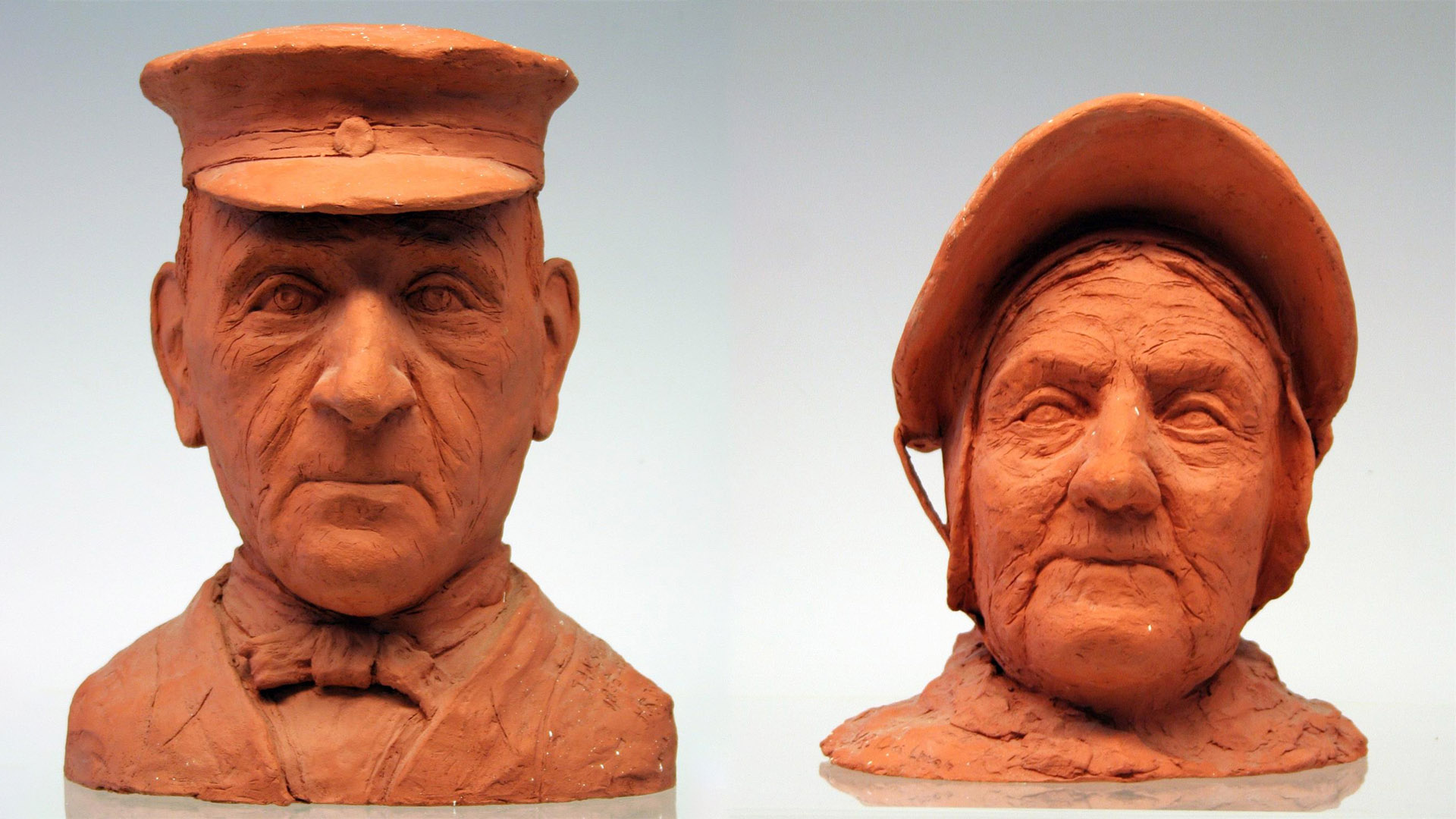
Jan Snijer (1835–1920) served as sexton of the Dutch Reformed Church, bell-ringer, night watchman, gravedigger, lighthouse keeper, and town crier for the municipality from 1850 to 1911.

Sijtje Draijer – van der Schinkel (1824–1908) was a fish seller from Zandvoort. Even in her old age, she still walked daily across the loose sand of the Visserspad to Haarlem, carrying full baskets of fish.