


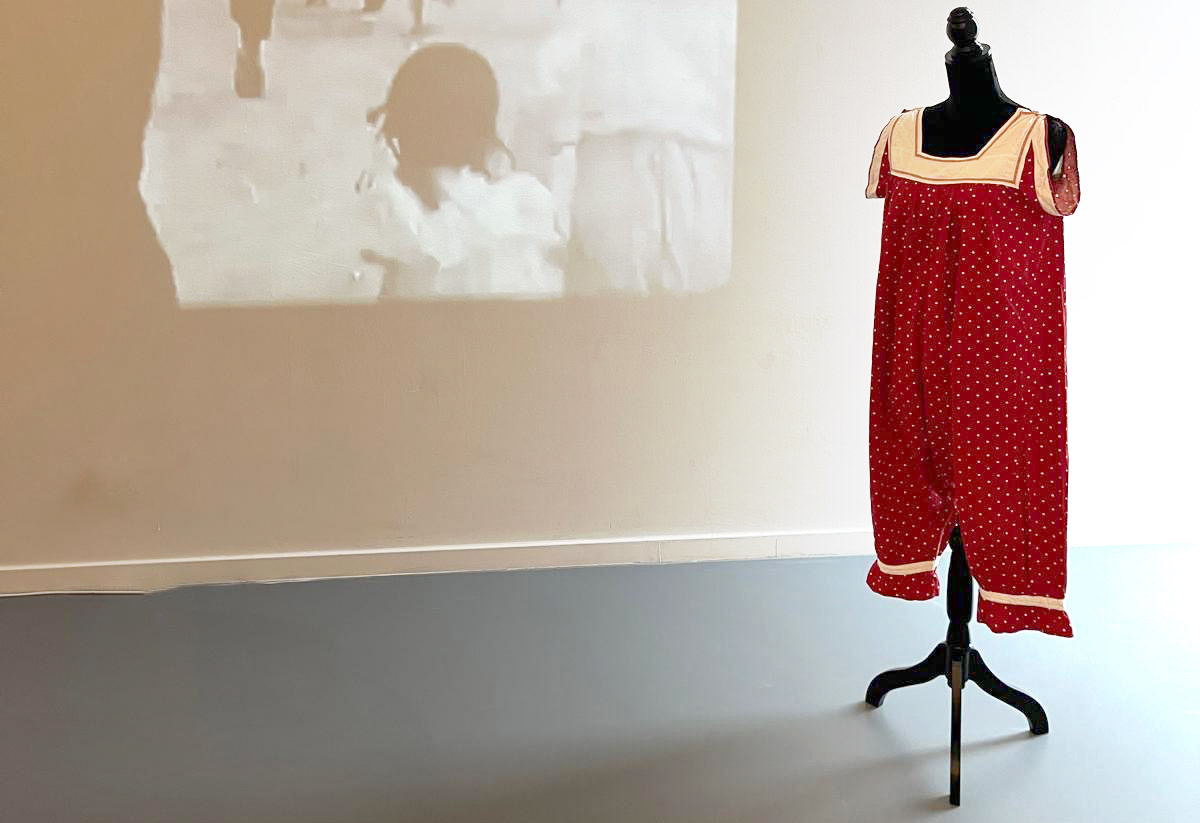
The Zandvoorts Museum has added a remarkable one-piece women’s swimsuit to its collection. The red swimsuit with white polka dots, worn by Maya van Beuningen, originates from the estate of the Van Beuningen family and was donated by an anonymous donor. Thanks to this donation, a tangible piece of family and bathing culture history is preserved.

The swimwear from the family estate consists of personal belongings that were part of their household. Such items are sometimes preserved through inheritance, auction, or donation, offering a rare glimpse into the daily life, fashion, and social status of a wealthy Dutch family.
The suit is designed in a tunic style with integrated knee-length legs and a straight silhouette. A ruffle finish has been applied to the bottom of the straight legs. The square neckline and short sleeves align with the modesty standards for swimwear around 1900. The bodice features subtle decoration and fastens at the shoulder with a button.
This type of bathing suit was worn at seaside resorts and bathing establishments, offering freedom of movement in the water while keeping the body largely covered.

Material: cotton; thread
Technique: machine-stitched, partly hand-finished
Color: red with white polka dots
Acquisition: from the Van Beuningen family estate (anonymous donation)
Swimwear around 1900 was often made of wool jersey or sturdy cotton and was either locally made or purchased as ready-to-wear. This one-piece model with legs was common in Dutch seaside resorts such as Zandvoort — a carefully crafted garment for a respectable dip in the sea.