



Around 1880, Kostverlorenpark was an amusement park. It was located southeast of Zandvoort and featured a tea house and a playground. You needed an admission ticket to enter the park. The last bomb barge was displayed in the park as an attraction. During World War II, bunkers were built in part of the park; after the war ended, they were rented out as vacation homes. That is still the case today.

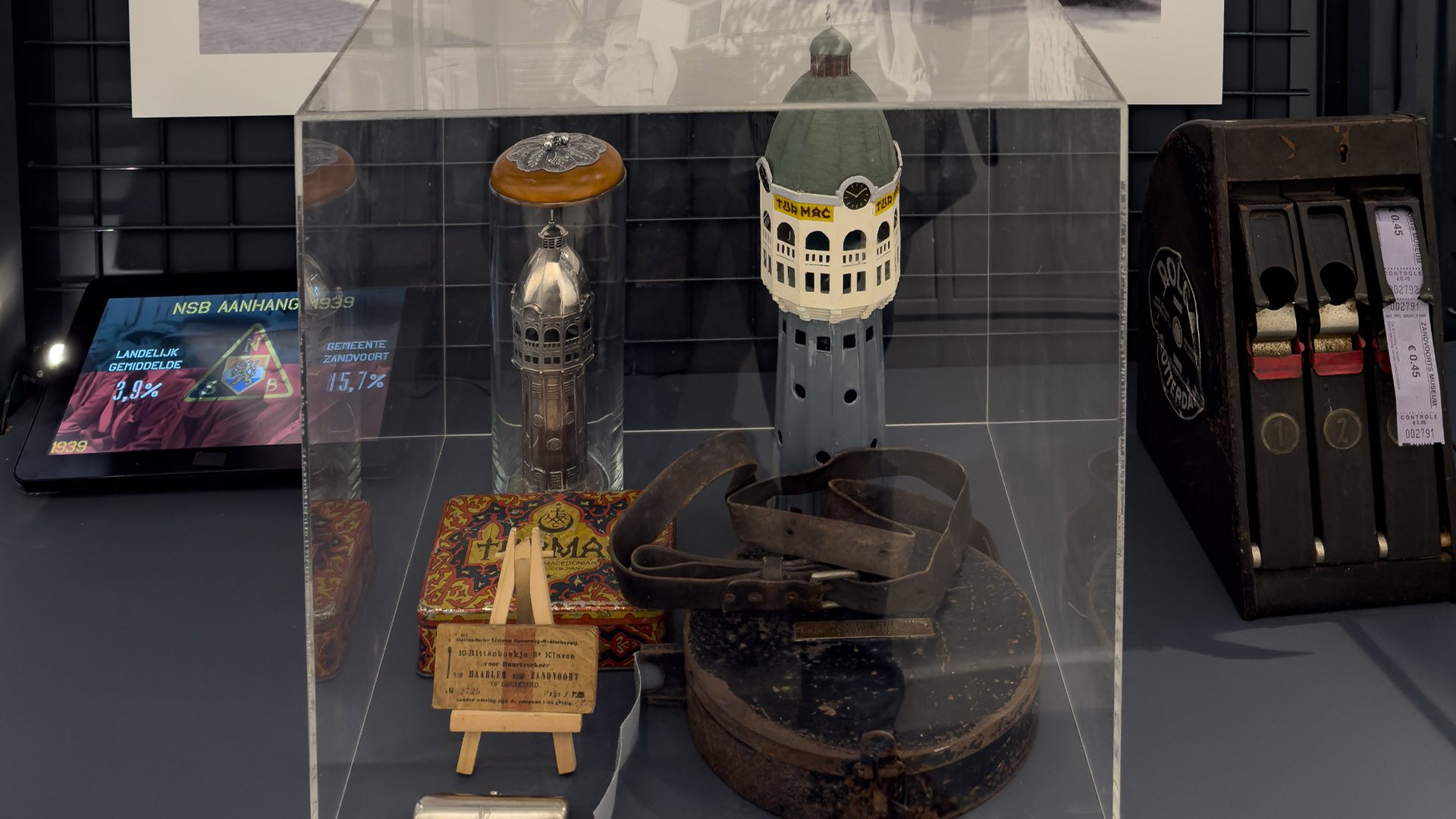
Scale model of the former Zandvoort water tower, built in 1913. At the top of the water tower’s exterior, at the four cardinal points, you can see the name “Turmac,” a former cigarette brand that advertised there in 1937. Turmac was also the sponsor of the clocks installed on the tower. In addition to its function as a water tower, it also housed a lookout point and a restaurant. In 1943, the tower was demolished with explosives by the occupying forces. A silver replica of the old water tower was created in 1914 by silversmith Jan van Dijk from Hoorn. The replica was purchased at Christie’s in 1999 by Simon Waterdrinker on behalf of Leo Heino’s Kunstcircus Foundation.

The village town crier of Zandvoort dates back centuries. He warned everyone when the fishing boats loaded with fish came ashore and announced when the mayor wanted to make an announcement. He did this by striking a “klink,” a brass lid. Well-known village town criers included Jacob Molenaar (known as “de Puur”), his son Floris Molenaar (known as “de Bokkum”), Jan Snijer, and Klaas Zwemmer (known as “de Zeebeer”). After the 2World World War II, the village town crier was no longer needed. However, competitions were still held featuring town criers from across the country. One of the best-known names from that era was Klaas Koper.

The bathing carriage was introduced when the Groot Badhuis Hotel was founded in 1828. It was used to transport bathers to the sea so they could bathe there out of sight. Later, the bathing carriages were used as changing booths. Around 1930, there were about 100 such carriages. The window of the bathing carriage on display here dates from around 1925.